Bothell sprinkler repair
We test before we dig, put the price in writing, and run every zone again before we go.
For Bothell yards with dead zones, soggy patches, stuck valves or a water bill that suddenly jumped. Our own crew, from nearby Lynnwood.
Leave your name and number. Danny calls you back to set a time.
Prefer to talk? Call (425) 648-9443
Sprinkler repair is finding the one part of an irrigation system that has quit and fixing it: a head clipped by a mower, a valve stuck open, a cracked line or a cut wire. We repair lawn and drip systems across Bothell, from Downtown and Westhill to Canyon Park, North Creek and Thrashers Corner, including systems someone else installed. Bothell has more than one water provider, so if a repair touches your backflow assembly, we check your provider's rules first.

On every visit
Small leak or dead zone, every visit starts and ends the same way.
Low pressure can make a healthy head look broken, so the pressure gets read before anything else.
Each zone runs while we watch the heads. Valves, solenoids and wires get a meter test.
Bothell has more than one water provider. If a repair touches your backflow assembly, we check what your provider requires before we start.
You get the problem and the cost in writing before we start, and the whole system runs again when the fix is done.
Common repairs
Cracked, plugged, sunken or tilted heads get swapped or reset, so each one covers its patch of lawn again.
→ Clipped by a mower → Sunk below the grass → Spraying the driveway or siding
Sticking or seeping valves get rebuilt, dead solenoids get replaced, and buried valve boxes get found without tearing up the lawn.
→ A zone stuck on, or stuck off → Wet ground around the valve box → Valve boxes lost under sod or bark
Cracked lateral and main lines get cut out and rejoined with proper fittings, not tape.
→ Pipe split by a freeze → Roots or a stray shovel → Fittings that pulled apart
Blank screens, lost programs and zones that never fire get sorted out. We also set up smart controllers that skip a cycle after rain.
→ Blank or reset controller → Still on a summer schedule in fall → Rain or freeze sensor not working
Cut, corroded or shorted valve wires get traced and spliced, so every zone answers the controller again.
→ One zone dead, the rest fine → Wire hit during a yard project → Corroded splices
We pin down a hidden leak before digging, then open the ground only over the problem.
→ Water bill up for no clear reason → Water bubbling up in the grass → One zone with weak pressure
Warning signs
You usually spot a sprinkler problem in the grass first. Here is what each sign tends to point to.
Usually: a plugged or sunken head, or a nozzle that doesn't match the rest of the zone.
Usually: a cracked line or a seeping valve under the wet spot.
Usually: a dead solenoid, a cut valve wire or a controller fault.
Usually: grit holding the valve open, or a torn diaphragm.
Usually: a hidden leak in a buried line, running every time the system waters.
Usually: seasonal groundwater, not a leak. Alderwood soils can hold perched water from December through April.
How we diagnose
From above, a plugged head, a bad valve and a cracked pipe all look like the same dry patch. Testing tells them apart. Wet ground needs the same care in Bothell. The USDA's reference profile for Alderwood soil was dug on Maltby Road, on the Bothell map sheet, and the USDA describes dense glacial till about 20 to 40 inches down, with a perched water table at times from December through April. A soggy spot in those months is not always a leak.
1. Guess from the dry spot 2. Dig where it looks worst 3. Replace the oldest-looking part 4. Leave the other zones untested
Result: parts on the bill, and the actual fault still underground.
1. Run every zone and watch the heads before touching anything 2. Meter-test the valves, solenoids and wiring 3. Check the controller and sensors, since a wrong setting can look like a broken part 4. Show you the cause and the price, fix it, then retest every zone
Result: one repair, aimed at what actually failed.
Timing
Bothell sits between two NOAA climate stations: Everett's Paine Field to the north and Sea-Tac to the south. The median first 32°F night is November 17 at Paine Field and November 23 at Sea-Tac. In one year out of ten it comes by October 31 at Paine Field. A cracked pipe that still holds water gets worse once it freezes, so plan repairs around the earlier dates.
April – September
Call when you spot a problem. A leak that runs on every cycle wastes water all season.
October
Repairs early in the month, blowout after, so the lines are empty before the first frost.
November – March
The lines stay empty. Wet ground now may be seasonal perched water in Alderwood soils, not a leak.
Late March – April
Turn the water back on after the last frost (median March 9 at Paine Field, March 2 at Sea-Tac) and run each zone. This is when freeze damage shows.
Oct 31
First frost in 1 year out of 10 (Paine Field)
Nov 17
First frost in a typical year (Paine Field)
Mar 9
Last spring frost in a typical year (Paine Field)
Source: NOAA NCEI 1991–2020 climate normals, Everett Paine Field (USW00024222) and Seattle-Tacoma Intl (USW00024233). First and last 32°F nights. More about sprinkler winterization →
Why Grizzly
01
We check the zones, valves and wiring before any part gets swapped.
02
The problem and the price, in writing, before we start.
03
Sprinklers or drip lines another company put in? We repair those too.
04
If a part is worn out, we tell you whether a repair or a replacement makes more sense before doing either.
05
No subcontractors. The crew that finds the problem is the crew that fixes it, and we're based in nearby Lynnwood.
06
Once the repair is done, every zone runs, not just the one we fixed.
How it works
01
Call or use the form. Tell us which zones act up and, if you know it, who supplies your water. Photos help.
02
We read the pressure and run each zone until the real fault shows up.
03
Once you approve the written price, our own crew makes the repair.
04
Every zone runs before we leave. Call us again in October for the fall blowout.
From our job photos

Before · Sept 9

After · Sept 24
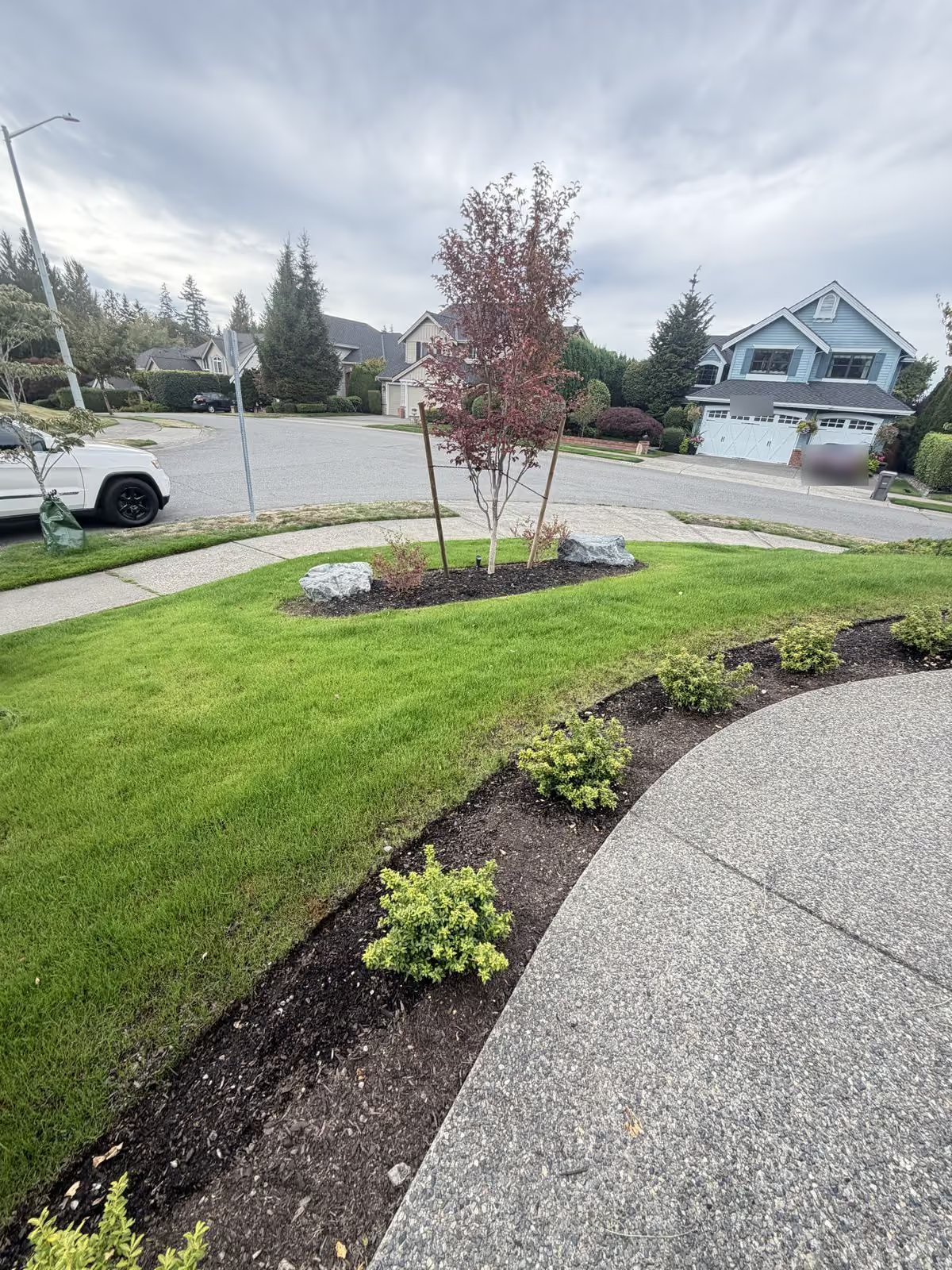
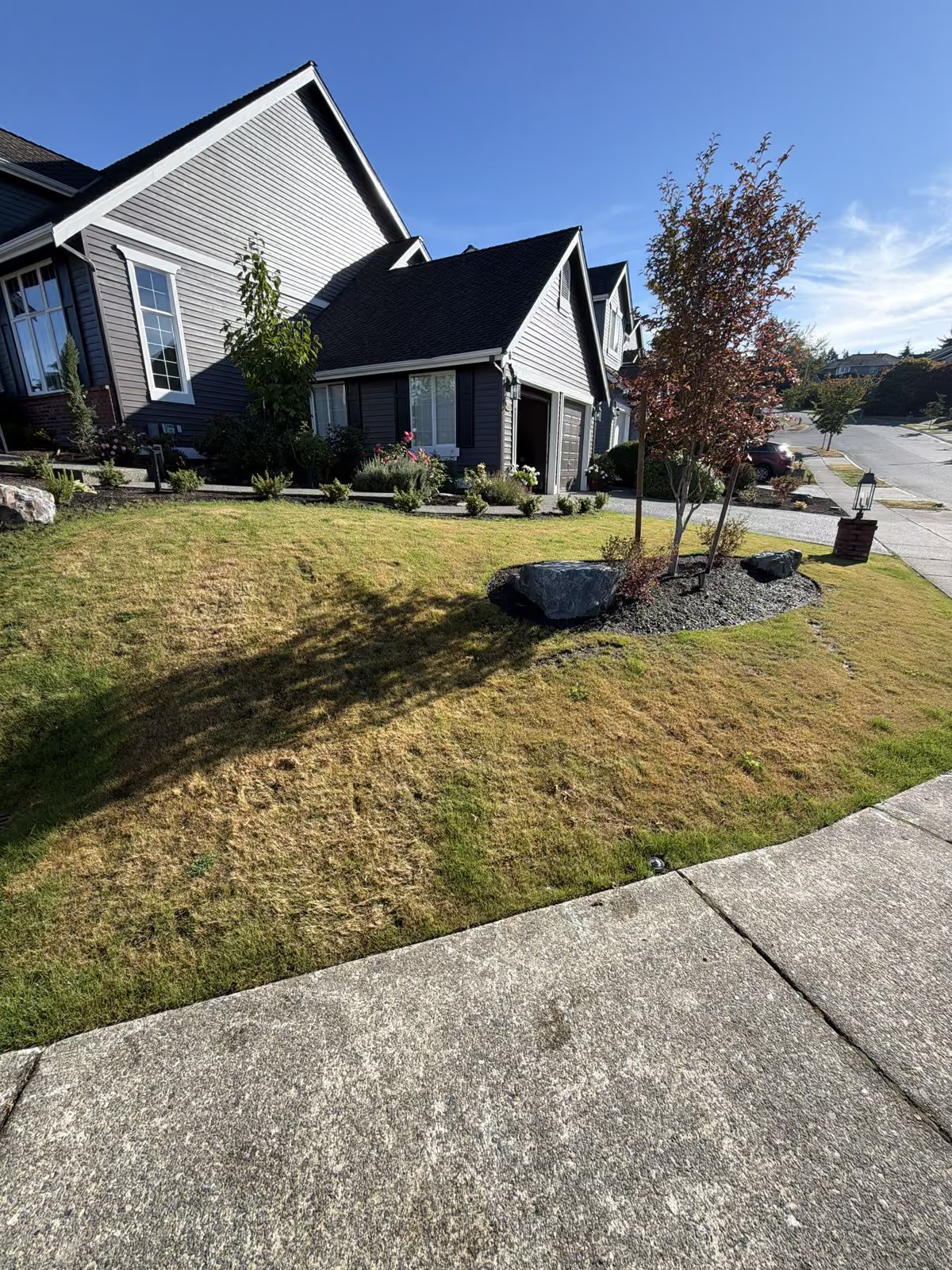
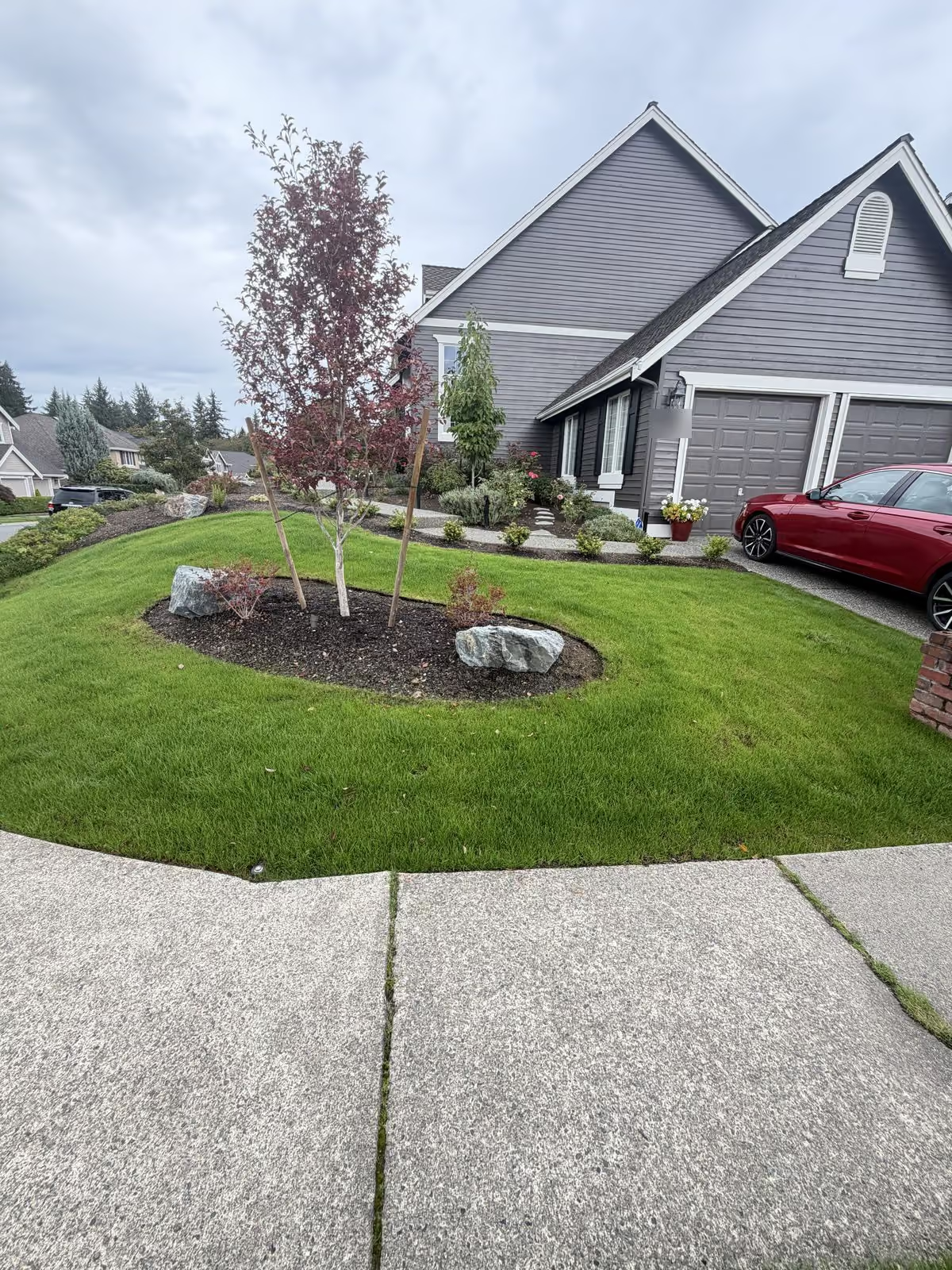
The same front lawn, 15 days apart: September 9 and September 24, 2026.
Reviews
★★★★★
"Danny worked on our broken irrigation pipe and a underground connector. He was efficient, on time, and got the job done cleanly. I would hire him again."
Anirban B. · Google review
★★★★★
"… Weeks after installation, I had an issue with one garden area getting oversaturated along with water build up so I called Danny and he came right over that same day and found that there was a faulty valve and he took care of it right away. Grizzly is competitively priced and Danny is very knowledgeable. …"
Ronald H. · Google review
★★★★★
"… He did a great job and was very thoughtful to not tear up the yard, and cleaned up the sidewalk as well. It turned out very nice! I appreciated the time he spent with me answering questions about my sprinkler system and other landscaping related questions I had. …"
Eric H. · Google review
Our guarantee
If a part we installed or a repair we made fails within 18 months, we come back and fix it. Every zone is retested before we leave, so most problems get caught on the day.
Where we work
We repair systems all over Bothell: Downtown, Canyon Park, North Creek, Westhill, Bloomberg Hill and Thrashers Corner. Bothell straddles the Snohomish and King County line, and we work on both sides of it, plus the cities below. Not sure you're in range? Call and ask.
Related services
New lawn and drip systems planned around your yard and water pressure.
Assemblies installed, repaired and replaced. On City of Bothell water, they're tested every year by a certified tester.
Questions
Watch for brown or dry spots, puddles, heads that don't pop up, a zone that won't start or won't stop, or a water bill that suddenly jumps. Catching these early keeps a small repair small.
Usually it's a failed valve solenoid, a damaged wire, a controller problem, or debris inside the valve. We meter-test each part to find out which.
Often it isn't the sprinklers. The USDA's reference profile for Alderwood soil sits on the Bothell map sheet, and the USDA describes that soil as holding a perched water table at times from December through April. If the system is shut down and drained, the water is most likely groundwater. If a spot stays wet in summer between cycles, a leaking valve or line is more likely, and we test for that first.
A hidden leak in a buried line is the most likely cause. Look for soggy ground, sinking soil or patches greener than the rest. We trace the leak to its exact spot first, so the ground only gets opened where the problem is.
Repair makes sense when one part has failed, like a broken head or a bad valve. Replacement makes sense when the system leaks again and again, waters unevenly or runs on outdated parts. We tell you which applies before we do either.
Only if the repair involves the backflow assembly. On the City of Bothell water system, an assembly must be tested by a Washington State certified Backflow Assembly Tester when it is installed, moved or repaired, and every year after that. Other water districts serve parts of Bothell, so we check which one serves your address and what it requires.
It depends on what failed and where. We test the system, show you what we found, and give you a written price before any repair starts.
Yes. Grizzly Landscape & Construction LLC is registered with Washington L&I as contractor GRIZZLC755LL, and is bonded and insured. You can look the number up on L&I's Verify a Contractor tool.
Yes. Our irrigation work carries an 18-month warranty: if something we installed or repaired fails in that time, we come back and fix it.
In October. Bothell sits between two NOAA climate stations. The first frost comes around November 17 at Paine Field and November 23 at Sea-Tac in a typical year, and by October 31 at Paine Field in about one year in ten. Repairs first, then a blowout, so the lines are empty before it freezes.

Free consultation across Edmonds, Lynnwood and Mountlake Terrace, WA.